Apple (AAPL): Growth Slows, Valuation Stays High
5 Year Overview
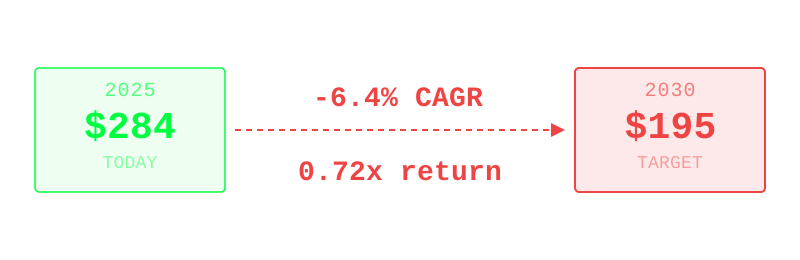
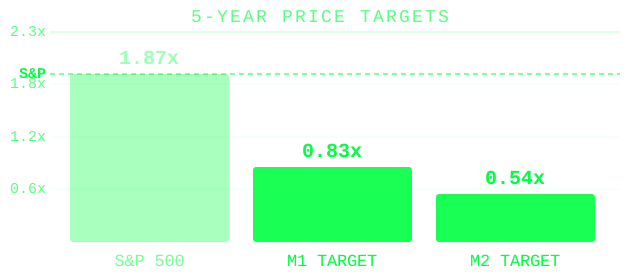
Right now, Apple Inc. trades at $284. Based on its historical financial performance, the data points to $195 in five years — that is 0.72x, or -6.4% CAGR. The S&P 500 is projected at 1.87x over the same period. That puts it 115% behind the S&P 500 over the same period.
Why 0.72x in 5 Years?
EBITDA Method
The current EBITDA is $145B and is projected to reach $184B in five years — that is 5.3% annual growth. Applying the sector's historical multiple of 19x EV/EBITDA gives a price target of $237, or 0.83x from today — behind the market.
Apple's projected return of 0.72x is lower than the S&P 500's 1.87x. This is because the company's EBITDA growth rate of 5.29% is slower than the S&P 500's average of approximately 13%, and the stock trades at 19.21x EV/EBITDA, which is higher than the S&P 500's typical 15-16x. Apple's EBITDA growth is driven by its strong Services segment and consistent iPhone sales, but the mature smartphone market limits overall acceleration. The market's valuation premium reflects Apple's powerful brand, ecosystem, and consistent profitability, which Wall Street generally expects to continue.
Free Cash Flow Method
The current free cash flow is $99B and is projected to reach $96B in five years — that is -0.7% annual growth. With an estimated FCF yield of 4.3%, this gives a price target of $153, or 0.54x from today — behind the market.
The FCF-method price target for Apple trails the S&P 500. This is primarily because the company's Free Cash Flow (FCF) growth rate is -0.7%, indicating a decline in cash generation. This decline in FCF is due to increased capital expenditures for new product development and supply chain investments, alongside changes in working capital. Apple's current FCF yield is 2.4%, which is slightly higher than the industry average of 2.2%, meaning you get a bit more cash flow per dollar invested compared to industry peers.
Blending both methods, the data points to $195 in five years, against today's $284.
Is It Still Growing?
Revenue
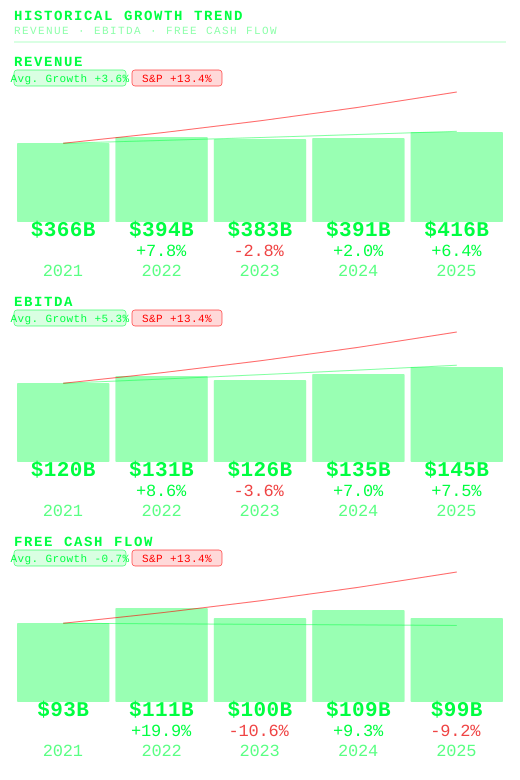
In FY2025, Apple Inc. brought in $416B in revenue, with a 5-year CAGR of 3.6%.
Apple experienced its biggest revenue year-over-year swing in FY2022, with an increase of 7.8%. This growth was primarily driven by strong demand for the iPhone 13 and 14 series, alongside robust performance in its Services segment. The Americas and Europe geographic segments were significant engines for this revenue expansion.
EBITDA
In FY2025, EBITDA came in at $145B, with a 5-year CAGR of 5.3%.
Apple's net income saw its biggest year-over-year swing in FY2025, increasing by 19.5%. During this period, the company's gross margin expanded from 46.2% to 46.9%, and its net margin rose from 24.0% to 26.9%, indicating improved profitability. Revenue grew by 6.4% in FY2025, while EBITDA grew by 7.5%, meaning EBITDA grew faster than revenue, showing the company became more efficient.
Free Cash Flow
Free cash flow for FY2025 was $99B, with a 5-year CAGR of -0.7%.
Apple's Free Cash Flow (FCF) saw its biggest year-over-year swing in FY2022, increasing by 19.9%. In FY2022, operating cash flow rose from $104.04B to $122.15B, while capital expenditures remained relatively stable, moving from -$11.09B to -$10.71B. This strong FCF growth was a result of robust sales performance and efficient operational management, which significantly boosted the cash generated from core business activities.
Growth Overview
Apple's revenue growth is accelerating, with the 3-year CAGR of 4.66% exceeding the 5-year CAGR of 3.59%. Similarly, EBITDA growth is also accelerating, as the 3-year CAGR of 10.35% is higher than the 5-year CAGR of 5.29%. EBITDA is growing faster than revenue, meaning the company is becoming more profitable per dollar it earns, indicating improving efficiency. However, Free Cash Flow is declining with a -0.7% 5-year CAGR, which is much slower than EBITDA growth; this gap indicates the company is consuming cash for investments or working capital. Overall, this is a company picking up speed in profitability but facing challenges in converting that into Free Cash Flow.
Financial Health
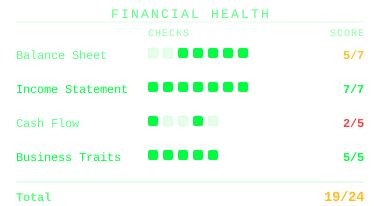
19 out of 24 checks passed.
For the full breakdown, see the detailed analysis on StockSnack:
→ StockSnack Home — https://stocksnack.app
→ AAPL Full Analysis (Pro Only) — https://stocksnack.app/screener/AAPL
What Does Apple Inc. Actually Do?
Product Breakdown
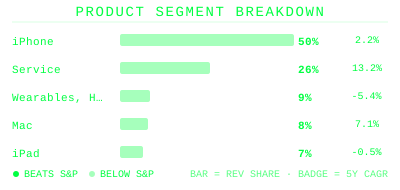 Top 1: iPhone — 50% of revenue.
This segment represents Apple's flagship smartphone business, selling devices globally to consumers and businesses. It includes the sale of iPhones and related accessories. This segment generated $209.59B, representing 50.4% of total revenue, and has a 2% CAGR, making it a steady earner that forms the core of Apple's ecosystem.
Top 2: Service — 26% of revenue.
This segment includes revenue from digital content and services like the App Store, Apple Music, iCloud, AppleCare, and advertising services. It caters to all Apple device users. This segment generated $109.16B, representing 26.2% of total revenue, and has a 13% CAGR, making it a significant growth engine for the overall business.
Top 3: Wearables, Home and Accessories — 8.60% of revenue.
This segment includes products like Apple Watch, AirPods, HomePod, and various Apple-branded and third-party accessories. These products extend the Apple ecosystem into personal health, audio, and smart home categories. This segment generated $35.69B, representing 8.6% of total revenue, and has a -5% CAGR, indicating it is a declining area that faces market challenges.
Growth by Segment
All Segments by Growth (S&P 500 benchmark: 13% CAGR):
- Service: 13% CAGR — This segment includes revenue from digital content and services like the App Store, Apple Music, iCloud, AppleCare, and advertising services. It caters to all Apple device users. This segment generated $109.16B, representing 26.2% of total revenue, and has a 13% CAGR, making it a significant growth engine for the overall business.
- Mac: 7.1% CAGR — This segment comprises Apple's line of personal computers, including MacBook laptops and iMac desktop computers, targeting both creative professionals and general consumers. This segment generated $33.71B, representing 8.1% of total revenue, and has a 7% CAGR, making it a steady growth area for the company.
- iPhone: 2.2% CAGR — This segment represents Apple's flagship smartphone business, selling devices globally to consumers and businesses. It includes the sale of iPhones and related accessories. This segment generated $209.59B, representing 50.4% of total revenue, and has a 2% CAGR, making it a steady earner that forms the core of Apple's ecosystem.
- iPad: -0.5% CAGR — This segment includes Apple's tablet computers, which offer a versatile computing experience for productivity, creativity, and entertainment. It serves a broad range of users from students to professionals. This segment generated $28.02B, representing 6.7% of total revenue, and has a 0% CAGR, indicating it is a stable but not growing area for the business.
- Wearables, Home and Accessories: -5.4% CAGR — This segment includes products like Apple Watch, AirPods, HomePod, and various Apple-branded and third-party accessories. These products extend the Apple ecosystem into personal health, audio, and smart home categories. This segment generated $35.69B, representing 8.6% of total revenue, and has a -5% CAGR, indicating it is a declining area that faces market challenges. On the other end, Wearables, Home and Accessories is the weakest performer at -5.4% CAGR. The Wearables, Home and Accessories segment is the weakest performer with a -5% CAGR, as it faces intense competition and potentially slowing demand for some accessory categories.
Geographic Performance
Japan: 8.8% CAGR · Europe: 8.5% CAGR · Rest of Asia Pacific: 6.7% CAGR
Valuation
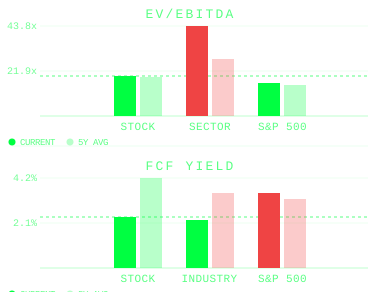
So, is Apple Inc. overvalued? We look at EV/EBITDA and FCF Yield.
EV/EBITDA
Apple Inc. is valued at 19x EV/EBITDA. The sector's historical multiple is also 19x, making this the benchmark for our price target model.
FCF Yield
The current FCF yield is 2.4%, versus the industry average of 2.2%. A higher yield means you are getting more cash flow per dollar invested compared to peers — a positive signal.
Apple's current EV/EBITDA multiple is 19.21x, which is higher than the S&P 500 average of approximately 15-16x, indicating the stock is expensive relative to the broader market. Wall Street broadly believes Apple's strong brand loyalty, robust ecosystem, and consistent profitability justify this premium, despite its mature market position. The company's FCF yield of 2.4% is slightly higher than the industry average of 2.2%, meaning investors are getting a slightly better deal on cash flow compared to industry peers.
Verdict
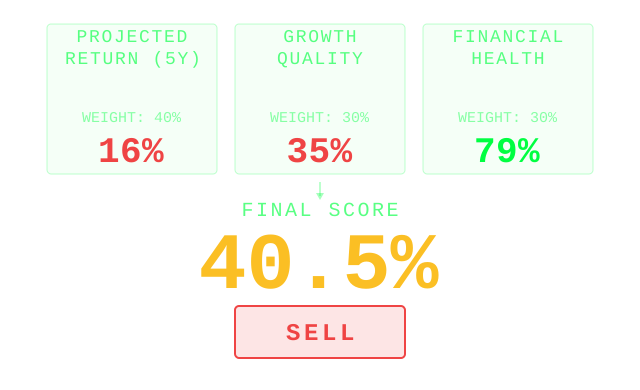
The numbers give Apple Inc. a final score of 40.5/100 — signal: SELL
Apple Inc. is projected to return 0.72x over 5 years, compared to the S&P 500's projected 1.87x over the same period.
The price projection score (16/100) is the limiting factor. Apple's projected return of 0.72x falls short of the S&P 500's 1.87x, even with cumulative dividend income of $8.73 per share over five years. The company shows mixed growth signals, with revenue and EBITDA accelerating, but Free Cash Flow declining. Its balance sheet presents some concerns regarding debt and cash flow consistency, despite strong margins. The stock is expensive, trading at a premium valuation compared to the broader market. This stock is for investors prioritizing stability, brand power, and ecosystem strength, but they must accept modest returns and rely on Apple's continued innovation and Services segment growth to justify the current valuation.
→ Full analysis on StockSnack https://stocksnack.app
→ AAPL Full Analysis (Members Only) https://stocksnack.app/screener/AAPL
(Score: price projection 16/100 × 40% · growth quality 35/100 × 30% · financial health 79/100 × 30%)
Want to run the numbers yourself? Every stock in our screener gets the same projection — blending two valuation methods, benchmarked against the S&P 500. Explore all 500 stocks on StockSnack →
Not financial advice. Always do your own research.